What to know about delays in Enfield rubbish collection
Posted on 08/10/2026
If your bins have been left behind, your street looks unusually full, or the usual collection time has come and gone without the familiar clatter of lids and wheels, you are not alone. Delays in Enfield rubbish collection can happen for all sorts of reasons, and they tend to cause a bit of a ripple through the week. Food waste starts to smell, recycling piles up by the door, and suddenly a simple household routine becomes one more thing to chase.
This guide explains what to know about delays in Enfield rubbish collection in plain English: why they happen, what to do first, how to tell whether the issue is temporary or likely to continue, and when a private collection service may be the faster, calmer option. We will also cover common mistakes, local expectations, and a few practical checks that save time when the situation is messy. Let's face it, nobody enjoys hanging around a half-full bag of recycling on a wet Thursday morning.

Why delays in Enfield rubbish collection matter
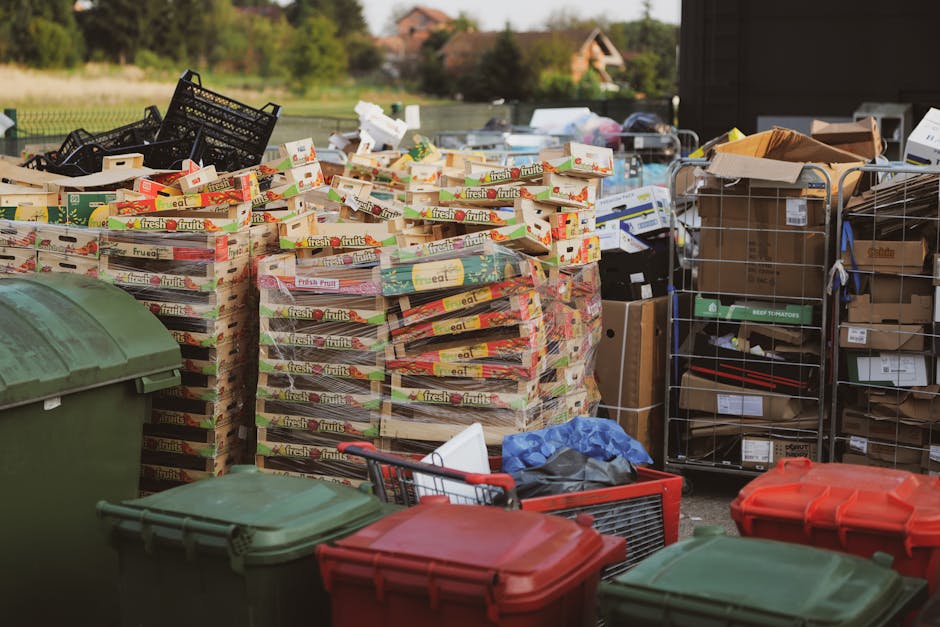
A missed or delayed collection is not just an inconvenience. It can quickly become a household hygiene issue, especially for food waste, nappies, or garden cuttings in warm weather. Even when the delay is short, the knock-on effect is real: overflowing caddies, recycling drifting in the wind, and a front path that starts to look untidy by day two.
In practical terms, the impact depends on what was missed. A general rubbish bin delay might be annoying. A missed food waste pickup can be much more noticeable. Bulky waste or mixed-up recycling can create extra confusion because some items are time-sensitive and some are not. You may need to keep items secure until the next available round, or choose a separate removal option if the delay is stretching out.
There is also the trust factor. People plan their week around collection days more than they realise. School runs, work shifts, and even parking on narrow streets can be affected when bins remain outside longer than expected. If you live in a busy part of Enfield, a delay can feel minor at first and then turn into a bit of a street-level nuisance by the evening.
Key takeaway: treat a delay early, not late. The quicker you identify whether it is a one-off disruption or a broader service issue, the easier it is to avoid smells, mess, and unnecessary stress.
How rubbish collection delays typically happen
Rubbish collection delays are usually caused by a mix of operational and local factors. Some are predictable, some are not. A vehicle breakdown can hold up an entire route. Staff shortages, road closures, planned works, severe weather, or access problems on a narrow street can all slow collections down. In autumn and winter, wet roads and earlier darkness can make already tight rounds run later than expected.
There is a simple distinction worth keeping in mind:
- Delay: the collection is later than usual, but still expected.
- Missed collection: your waste was not taken on the scheduled day and may require follow-up.
- Service disruption: multiple streets or whole areas are affected, often because of a broader operational issue.
That distinction matters because your next step depends on which one you are dealing with. A delay may only need patience and a quick check later in the day. A missed collection might need reporting. If you are arranging a private collection instead, timing becomes even more important because you do not want waste sitting around for another week if you can help it.
One thing people often overlook: access. It sounds boring, but it is a frequent culprit. If bins cannot be reached safely because of parked cars, overhanging branches, locked gates, or partially blocked roads, the round can be delayed or skipped. That is especially common in places where kerb access is already tight. The truck may be there, but not quite able to do the job cleanly.
Key benefits and practical advantages
Understanding delays properly gives you more control. That sounds obvious, but in real life it is the difference between waiting all day and making a sensible plan by lunchtime. When you know what usually causes the delay, you can decide whether to leave bins out, bring them in, report the issue, or arrange an alternative collection.
Here are the main advantages of taking a calm, structured approach:
- Less mess: you can secure waste before animals, rain, or wind make the problem worse.
- Less confusion: you will know whether to report a missed bin or wait for a delayed round to finish.
- Better household hygiene: food waste and black bin waste are handled more carefully.
- More reliable planning: if you use a private collection, you can schedule around the disruption.
- Lower stress: simple clarity beats repeated guessing, every time.
For landlords, local businesses, and households with larger volumes, the advantage is even clearer. A delay on one bin may be annoying, but a delay on several sacks, builder's waste, or commercial containers can affect operations, front-of-house appearance, and storage space. Truth be told, no one wants a neat premises undermined by bags stacked behind a fence for three extra days.
It also helps with sustainability. If items are left outside too long, they are more likely to get damaged or mixed with contamination. A blown-away lid, a soggy cardboard box, or a split bag can all create unnecessary waste. Acting early can make recycling easier to separate and keep other materials clean.
Who this is for and when it makes sense
This guidance is useful for anyone in Enfield dealing with delayed household waste pickup, but it becomes especially relevant in a few situations. If you live on a route with limited access, if you have recently moved and are still working out collection day patterns, or if your property produces more waste than average, a delay can hit harder than it does elsewhere.
It also makes sense if you are:
- a homeowner trying to keep the front of the property tidy
- a tenant who is unsure whether to report the issue or wait
- a landlord managing end-of-tenancy waste
- a business owner who cannot afford waste to gather behind the premises
- someone clearing a house, loft, garage, or garden who needs a faster fallback option
In our experience, people tend to seek help at two very different points. Some call the moment a bin is not emptied on time. Others wait too long, by which point the waste has become awkward, smelly, or just plain too much to ignore. Neither approach is ideal. The sweet spot is noticing the delay early and acting with a bit of judgement.
If you are juggling bulky items as well as general rubbish, the situation can move from annoying to urgent fairly quickly. That is often when a dedicated service such as rubbish collection in Enfield or a broader waste removal service becomes the practical backup.
Step-by-step guidance if your collection is delayed
If your rubbish has not been collected, use a simple sequence rather than guessing. It saves time and stops small issues turning into bigger ones.
- Check the scheduled day and time. Some rounds run later than expected, particularly after route changes or weather disruption.
- Look for local service updates. If there is a widespread delay, it is usually affecting more than one street.
- Check whether the waste was presented correctly. Bins should be out by the required time and placed where they can be accessed safely.
- Separate the issue from the timing. A late collection is not the same as a missed one.
- Keep the waste secure. Close lids, tie bags, and store loose items safely if wind or animals are likely.
- Report a missed collection if needed. If the bin should have been taken and clearly was not, follow the relevant reporting route.
- Consider an alternative collection. If the delay is causing problems now, do not wait another week if there is a quicker solution available.
A practical example: if your recycling is still outside by late afternoon and the street has already been visited by other vehicles, you may be dealing with a genuine miss rather than just a late round. On the other hand, if the collection pattern in the area has shifted due to works, the truck may still be due later. You can usually tell by looking at whether nearby properties have been emptied or not. Small clue, but useful.
For larger clearances, you may need a more tailored plan. Services such as house clearance in Enfield or builders waste disposal can help when the delay is only one part of a bigger cleanup.
Expert tips for better results
There are a few habits that make delays much easier to handle. Nothing dramatic. Just the kind of small, sensible stuff that saves you a headache later.
- Put bins out with a buffer. If collection times vary, avoid cutting it too fine.
- Keep lids closed tightly. It reduces pests and stops rainwater adding weight.
- Label mixed waste carefully. This is especially helpful for shared properties or multiple households.
- Photograph the setup if needed. If a collection is missed, a clear photo can help show that the waste was presented properly.
- Use covered storage where possible. A shed, bin store, or secure side return buys you time when delays happen.
- Plan for peak periods. After holidays, windy weather, or road disruption, collection schedules can become less predictable.
If you already know your street can be awkward for larger vehicles, think ahead. Waste vans need safe access, and narrow roads, parked cars, or blocked entrances can slow things down. A small adjustment - moving a car, opening a gate earlier, or leaving a clear path - can make the difference. It sounds almost too simple, but that is usually how it works.
Another useful habit is to keep a backup option in mind. If you regularly generate more waste than the standard weekly collection can comfortably handle, it may be worth comparing one-off removal versus waiting for the next scheduled round. The choice is often not just about cost; it is about timing, convenience, and how much disruption you can tolerate.
Common mistakes to avoid
Most problems with delayed collections come from understandable assumptions. The issue is that rubbish does not behave politely while you are waiting for clarity.
- Assuming every delay is a missed collection. Sometimes the round is simply running late.
- Leaving waste unsecured for too long. That is how smells, pests, and scattered litter start.
- Adding extra waste after the collection should have happened. This can make follow-up harder to assess.
- Ignoring access problems. If there is a parked car or blocked path, it may happen again.
- Waiting several days before taking action. By then the mess has usually grown, not shrunk.
One subtle mistake is trying to solve a collection delay by simply squeezing more into the bin. Everyone has done something like this at some point - a bag balanced on top, a lid that only just closes, a cardboard box folded twice because there is no choice. But if the bin is already full and the collection has slipped, overfilling tends to make the next pickup harder, not easier.
If your waste is bulky, awkward, or not suited to normal bin collection, it may be better to use a dedicated service rather than risk a build-up. For example, furniture removal in Enfield and white goods and appliance disposal are more appropriate for large items than waiting around for a standard round.
Tools, resources and recommendations
You do not need fancy tools to handle a rubbish delay well. A few basic items and some good habits will cover most situations.
| Useful item | Why it helps | Best use |
|---|---|---|
| Bin liners or heavy-duty sacks | Keep waste contained if the collection is delayed | Food waste, household rubbish, mixed small items |
| Bin store or covered area | Protects waste from weather and pests | Front gardens, side returns, shared access areas |
| Phone camera | Creates a record of what was presented and when | Missed collections, access disputes, follow-up reports |
| Calendar reminder | Helps you spot pattern changes quickly | Weekly collection routines, holiday weeks, route changes |
| Alternative removal service | Provides a fallback when waiting is not practical | Bulky waste, overflow, house clearances, urgent cleanups |
One recommendation that often gets overlooked: keep your waste types separate as much as possible. Mixed bags create more problems when a delay happens, because recycling, general rubbish, garden waste, and bulky items all behave differently. If one stream is delayed and another is not, you can respond more cleanly and avoid contaminating materials that could still be reused or recycled.
If you are comparing services, look beyond the headline promise. A same-day solution can be useful, but you still want clarity on what will be taken, how access is handled, and whether the team is insured and compliant. The best outcome is not just speed. It is speed with no mess left behind.
Helpful pages on this site include services overview, pricing and quotes, and insurance and safety if you want to understand the basics before booking.
Law, compliance, standards and best practice
When waste is delayed, compliance still matters. The important point is not to guess at rules, but to follow the normal duty of care expected around household, garden, commercial, or mixed waste. In plain terms, waste should be stored safely, kept under control, and passed to a legitimate carrier when it is removed.
For residents, the practical best practice is simple: keep waste contained, avoid fly-tipping, and do not leave loose rubbish where it can escape into the street or shared areas. For businesses and landlords, the bar is higher because waste handling can affect tenants, customers, and neighbours. If a collection is delayed, the duty to keep the area tidy does not pause with it. Frustrating, yes. Still true.
If you are using a private operator, look for clear compliance and carrier information. That helps reduce the risk of handing waste to someone who should not be moving it in the first place. The site's waste carrier licence and compliance page is a good place to understand that side of things in more detail.
Best practice also includes avoiding contamination. Food waste mixed into recyclables, or construction debris mixed with general rubbish, can create avoidable problems. That matters even more during delays because mixed waste is harder to manage if you need a second collection or a backup service. A clean separation now saves hassle later.
Options, methods, and comparison table
When a collection is delayed, you usually have three broad choices: wait, report, or arrange an alternative removal. The right choice depends on the type of waste, how urgent the issue is, and how much space you have left at home or on-site.
| Option | Best for | Pros | Cons |
|---|---|---|---|
| Wait for the delayed round | Minor delay, no urgent waste build-up | No extra cost, simplest approach | May be messy if the delay extends |
| Report a missed collection | Bin clearly should have been emptied | Creates a formal record, may trigger follow-up | Can take time to resolve |
| Book a private rubbish removal service | Urgent overflow, bulky items, house clearances | Fast, flexible, avoids extra waiting | Usually involves a direct cost |
In a normal week, waiting may be enough. But if the delay is becoming a storage problem, or if you are dealing with bigger items, a private collection can be more efficient overall. People often focus on the price and overlook the cost of inconvenience: blocked hallways, cluttered gardens, and another day of walking past the same bags. That adds up, even if no invoice does.
A sensible middle ground is to use a service that can handle multiple waste types in one visit. Domestic waste, garden waste, furniture, or even office items can often be cleared together when the situation calls for it. That is much easier than coordinating several separate pickups after a delay has already thrown things off.
Real-world example
A common local scenario goes like this. A household in Enfield puts out black bags and recycling the night before collection, expecting the usual morning pickup. By lunchtime, the bins are still there. Neighbours begin to do the same thing: a few bin lids open in the wind, one cardboard box gets soggy after a light shower, and by late afternoon the whole street looks a bit more tired than it did at breakfast.
At that point, the homeowner has three choices. They can wait and hope the round is simply late. They can check whether the issue is widespread in the area. Or they can move quickly, bring the waste back in if possible, and arrange a fallback. In that kind of moment, the right answer depends on how much waste there is and what kind it is. If it is mainly general household rubbish, waiting may be fine. If it includes broken furniture or bulky items from a weekend clear-out, a targeted collection is often the smarter move.
We see this most clearly during busy household periods - after a house move, during a loft clear-out, or when people have left garden cuttings out for longer than planned. It is one of those things that seems manageable at first, then suddenly becomes a hallway full of bags and a slightly hopeless feeling at 7pm. Not the end of the world, but nobody wants to sleep beside a bin bag if they can avoid it.
In those situations, services such as garden waste removal in Enfield or loft clearance in Enfield can solve the problem more cleanly than waiting for a delayed round to catch up.
Practical checklist
Use this checklist when your Enfield rubbish collection does not arrive on time.
- Check the collection day and whether the service is known to be running late.
- Confirm the bin was placed out correctly and in a safe, accessible spot.
- Look at nearby properties to see whether the issue appears local or wider.
- Keep lids shut and loose waste secured.
- Move any sharp, smelly, or weather-sensitive items indoors if possible.
- Take a photo if you may need to report a missed collection.
- Separate general waste from recycling and bulky items.
- Decide whether to wait, report, or book an alternative removal.
- For repeated issues, note the day, time, and pattern.
- If the delay is causing immediate problems, act sooner rather than later.
Quick reminder: if the waste is already becoming a nuisance, do not keep hoping it will magically sort itself out. Waste has a way of making its presence known.
If the delay has turned into a bigger clearance job, you may want to review options like domestic waste collection or commercial waste removal in Enfield depending on the property and volume involved.
Get a free quote today and see how much you can save.
Conclusion
Delays in Enfield rubbish collection are frustrating, but they are usually manageable when you deal with them early and sensibly. The important thing is to work out whether you are facing a late round, a missed collection, or a wider disruption. Once you know that, the next move becomes much clearer.
For small delays, a little patience and a secure bin setup may be enough. For repeated problems, bulky waste, or situations that are already getting messy, a private removal option can save time, space, and a good deal of irritation. In the end, that is what most people want: not drama, not guesswork, just a clean and simple resolution.
And honestly, when the bins are finally gone and the path is clear again, the whole place feels lighter. Funny how something so ordinary can make such a difference.